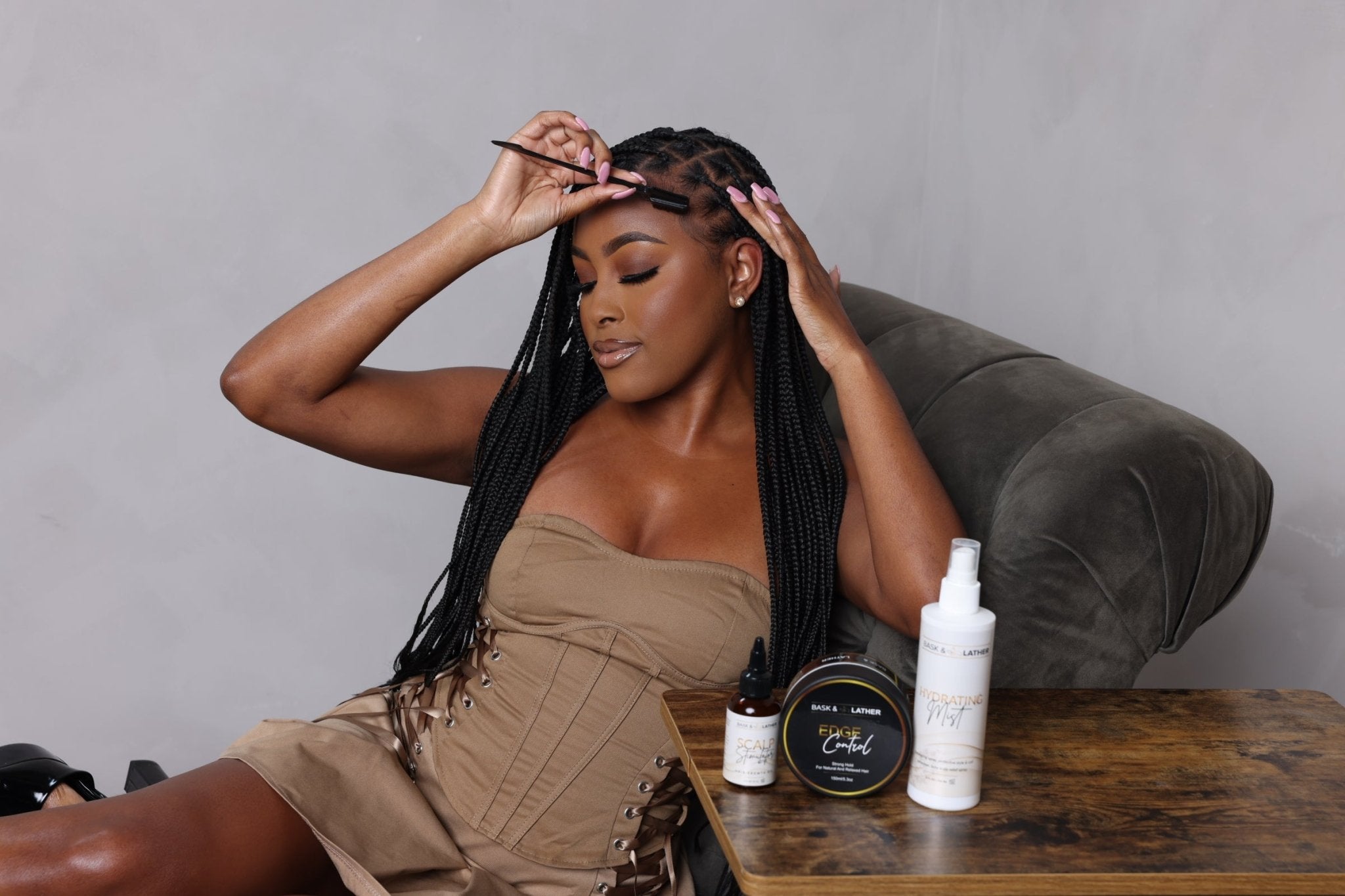
The sleek ponytail. The perfectly laid slick-back. The defined, piece-y curls that hold all day. Getting those looks takes product, and often a lot of it. Gel to lay everything down, cream to define, maybe a wax or a pomade to finish.
Individually, none of that is a problem. The problem is what happens when those products layer up week after week and never fully come off. Over time, that residue turns into buildup, and buildup does more than sit on your hair. It settles into your scalp and quietly throws everything off balance.
If your scalp has been feeling heavy, itchy, or just not right lately, product buildup might be the reason.
How Buildup Actually Happens
Every time you style your hair, you're adding product. Gels, creams, oils, waxes, and stylers all leave a residue behind. Some of it rinses out on wash day, but not all of it, especially the heavy, hold-focused products designed to cling to your hair and last all day.
The products that give you the best hold are often the hardest to fully remove. That's the trade-off. A gel strong enough to keep your edges laid for a week is, by design, not going to disappear with a quick rinse. So a little residue stays behind. Then you style again, and a little more stays. Layer by layer, wash after wash, it accumulates.
This is how buildup sneaks up on you. It's not one bad wash day. It's the slow accumulation of residue that never fully clears, until one day your scalp feels congested and you're not sure why.
What Buildup Does to Your Scalp
Here's where it stops being just a hair issue and becomes a scalp issue.
Your scalp is skin, and like all skin, it has follicles and pores that need to stay clear to function. When product residue builds up, it coats your scalp and settles around your follicles. Over time, that layer suffocates the follicles, blocking them and interfering with the healthy environment your hair needs to grow.
Clogged follicles can lead to a whole cascade of problems. Your scalp can't breathe or shed dead skin properly, which leads to flaking and itchiness. The trapped residue creates imbalance, throwing off your scalp's natural oil production. And in that congested, imbalanced environment, irritation and discomfort become the norm rather than the exception.
Buildup also blocks the good stuff from getting in. When your scalp is coated in residue, the nourishing products you apply, the oils, the treatments, the hydration, can't penetrate properly. You end up layering more product onto a scalp that can't actually absorb any of it, which only makes the problem worse.
The Signs You're Dealing With Buildup
Buildup doesn't always announce itself, but there are telltale signs.
Your scalp feels heavy or coated, like there's a film on it that washing doesn't quite remove. You're seeing flaking that looks like residue rather than dry skin. Your scalp gets itchy, especially in the areas where you apply the most product, like your edges and hairline. Your hair looks dull and weighed down no matter what you do. And the products that used to work don't seem to do anything anymore, because they can't get through the layer of buildup to reach your scalp.
If a few of these sound familiar, your scalp is likely telling you it needs a reset.
Why Regular Washing Isn't Always Enough
The instinct when your scalp feels congested is to just wash more. And washing helps, but standard shampooing often can't fully break through heavy, layered buildup on its own.
The residue from hold products is stubborn. It's designed to resist water and last through humidity, sweat, and daily wear. A regular shampoo, especially a gentle one, can struggle to cut through weeks of that kind of accumulation in a single wash. You rinse, your scalp feels a little better, but the underlying layer is still there.
This is exactly why a reset step matters. Before you cleanse, you need something that loosens and melts away the buildup so your shampoo can actually do its job. That's the gap a dedicated pre-shampoo step fills. Applied before you wash, it breaks down the stubborn residue that heavy stylers leave behind and soothes the scalp that's been suffocating underneath it. By the time you follow with the Scalp Balancing Shampoo, the hard part is already done and it can cleanse away what's been loosened without stripping your scalp.
How to Reset a Scalp Full of Buildup
Clearing buildup isn't complicated, but it does take the right approach rather than just more washing.
Start with the pre-shampoo to loosen and melt away the accumulated residue. Give it a few minutes to break down what's been clinging to your scalp. This is the step that does the heavy lifting, dissolving the buildup that regular washing leaves behind.
From there, cleanse to wash away everything the pre-shampoo loosened. Because the residue is already broken down, your cleanser can remove it without you having to scrub aggressively or wash multiple times, and without stripping your scalp of the natural moisture it needs. Follow with conditioning to restore balance, and finish with lightweight hydration to keep your scalp comfortable going forward.
This is where a complete scalp reset routine earns its place. It detoxifies and resets your scalp, clearing away stubborn residue without stripping the essential moisture that keeps your scalp balanced. You get a genuinely clean foundation, not a stripped and irritated one.
Prevention Going Forward
Once you've reset your scalp, a few habits keep buildup from creeping back.
Do a proper reset regularly, not just when your scalp is already congested. Working the pre-shampoo step into your routine on a consistent basis stops residue from accumulating to the point of causing problems. Be mindful of how much product you're layering on, and when you can, give your scalp stretches where it's not carrying heavy stylers. And make sure you're rinsing thoroughly every wash, since residue left behind today becomes buildup tomorrow.
You don't have to give up the styles you love or the products that make them possible. You just have to reset consistently so the buildup never gets the chance to suffocate your scalp.
A Clear Scalp Is a Healthy Scalp
Your favorite styles and a healthy scalp aren't at odds. You can have both. The key is understanding that the products behind those looks leave something behind, and giving your scalp the reset it needs to clear it.
When your follicles are clear and your scalp is balanced, everything works better. Your treatments absorb. Your scalp feels comfortable. And your hair grows from a clean, healthy foundation instead of fighting through a layer of buildup.
Lay the edges. Define the curls. Just don't forget to reset underneath.
Frequently Asked Questions
What causes product buildup on the scalp?
Buildup comes from the residue that styling products leave behind, especially heavy hold products like gels, creams, and waxes. Some residue stays behind after every wash, and over time it layers up and accumulates on your scalp.
How do I know if I have product buildup?
Common signs include a scalp that feels heavy or coated, flaking that looks like residue, itchiness in high-product areas like your edges, dull or weighed-down hair, and products that no longer seem to work because they can't penetrate the buildup.
Can product buildup stop my hair from growing?
Buildup can clog your follicles and create an imbalanced, congested scalp environment, which interferes with healthy growth. It doesn't permanently stop growth, but clearing it creates a much better foundation for your hair to thrive.
Why doesn't regular shampoo remove all the buildup?
Heavy hold products are designed to resist water and last through daily wear, which makes their residue stubborn. A regular shampoo often can't fully break through weeks of layered buildup in one wash, which is why a pre-shampoo reset step helps loosen it first.
How often should I reset my scalp to prevent buildup?
Work a reset into your routine consistently rather than waiting until your scalp feels congested. Regular use of a pre-shampoo step, along with thorough rinsing and mindful product layering, keeps buildup from accumulating to problem levels.